










We have discussed the financial tightrope of the NRI existence before—the mortgages, the remittances, the golden handcuffs. But the social tightrope is far more slippery, and nothing greases the wire quite like the annual holiday party invitation with the innocuously terrifying words: Spouse/Partner Welcome.
For many upwardly mobile Indians in the West, this isn’t a gesture of hospitality. It is a threat to the carefully curated “Work Self” you have spent years building.
You know the feeling. You stare at the RSVP. You love your partner. They are intelligent, charming, and capable. Yet, a knot tightens in your stomach. Will they understand the dry, British sarcasm of your VP? Will their accent be too thick for the client from Texas? Will they ask inappropriate questions about salary?
This isn’t about them. It’s about you.
It is the specific, unspoken anxiety of the immigrant professional: The fear that your “Home World” will crash into your “Work World” and shatter the illusion of your perfect assimilation.
Here is the brutal truth about why this anxiety exists and the playbook on how to navigate it without turning your marriage into a frantic PR exercise.
The Theory of Assimilation Fragility
To understand the fear, we must dissect your corporate avatar. Most NRIs engage in extreme code-switching. At the office, you have neutralized your accent, you nod at baseball references you don’t understand, and you have learned to laugh at jokes that aren’t funny. You have become “Palatable.”
Your partner represents the raw, unfiltered reality of your background. They are the control variable you cannot manage.
If your spouse has a heavy accent, dresses traditionally, or lacks familiarity with Western corporate nuance, your anxiety spikes. You worry that their “Indianness” will somehow retroactively apply to you, undoing the years you spent distancing yourself from the “Fresh Off the Boat” stereotype. This is Assimilation Fragility. You fear that your professional competence is so loosely tied to your identity that a single awkward interaction by your spouse could downgrade your status from “Senior Analyst” to “Just Another Immigrant.”
The Three Pillars of Social Anxiety
Through countless off-record conversations with tech leads in the Valley and bankers in London, I have isolated the three specific fears that haunt the NRI in this scenario.
1. The Accent Bias Proxy. You are terrified your boss will judge your partner’s intelligence based on their cadence. We know this is a colonial hangover—we subconsciously equate a crisp Western accent with competence. When you worry about your partner speaking, you are projecting your own internalized bias onto your colleagues. You are scared you will be judged for choosing a partner who hasn’t “caught up.”
2. The Cultural Dead Air. Small talk in the West is a distinct sport. It is tennis—back and forth, light, rhythmic. Indian social discourse is often rugby—full contact, interruptions, deep dives into personal topics quickly. The fear here is the silence. The moment your partner says something earnest, and the circle of colleagues goes quiet because the rhythm broke. You dread having to jump in as the frantic translator of intent.
3. The Stereotype Confirmation. This is the darkest one. If you are a woman in tech, you fear your husband might come off as the patriarchal, domineering Indian male. If you are a man, you fear your wife might be perceived as the submissive, silent dependent. You are desperate to prove your household is “modern,” and you view the company mixer as a courtroom where this must be proven.
The Playbook: From Panic to Power Move
You cannot coach your partner into becoming a different person over a weekend. Nor should you. That is a recipe for a fight in the Uber on the way home. Instead, use this strategic framework to manage the environment.
Phase 1: Context, Not Coaching
Do not critique their grammar or clothing. That destroys confidence. Instead, provide Intel.
- The Cheat Sheet: Give them the “Dossier.” Who is the boss? What are they obsessed with? Who is the office gossip?
- The Goal: “Honey, John loves talking about his marathon training. If you get stuck, ask him about his knees. Sarah is intense; she will ask what you do. Just give her the one-line elevator pitch we practiced.”
- Make them an insider before they walk in. When they know the office politics, they feel superior, not inferior.
Phase 2: The Bridge Protocol
Your job at the event is not to hide your partner; it is to bridge the gap.
- The Pre-emptive Intro: Do not say, “This is Rahul.” Say, “This is Rahul, he’s the one who actually understands the supply chain nightmare I was complaining about last week.”
- Anchor the Value: Immediately tie your partner’s expertise or personality to something your colleagues respect. If your wife is a homemaker, do not apologize for it. “This is Priya. She manages the chaos of our lives so I can actually show up here at 8 AM.” Own the narrative.
Phase 3: The Cultural Pivot
If the “cultural mismatch” happens—if your partner says something too direct or the accent causes a “sorry, what?” moment—do not cringe. Do not look at the floor.
- Step in, don’t step over. Rephrase their point with a smile, validating them. “I think what Ayesha is getting at is that the traffic in Mumbai makes the 405 look like a runway, right?”
- Normalize the difference. If they don’t get a reference, laugh it off. “Guys, he grew up watching cricket, not the Super Bowl. You have to explain the quarterback concept first.”
The Wake-Up Call
Here is the reality check you need.
Your colleagues are not scrutinizing your partner’s accent as closely as you are. They are worried about their own spouses. They are worried about getting drunk and saying something stupid to HR.
By trying to hide your partner’s Indianness, you are signaling shame. And in the corporate world, shame is sharks’ blood in the water.
Confidence is the only currency that matters. When you walk in with your partner, hold your head high. Introduce them with pride. The moment you stop treating your heritage as a liability, your colleagues will stop treating it as a curiosity.
The next time that invitation lands, click “Accept.” The only thing you have to lose is your insecurity.
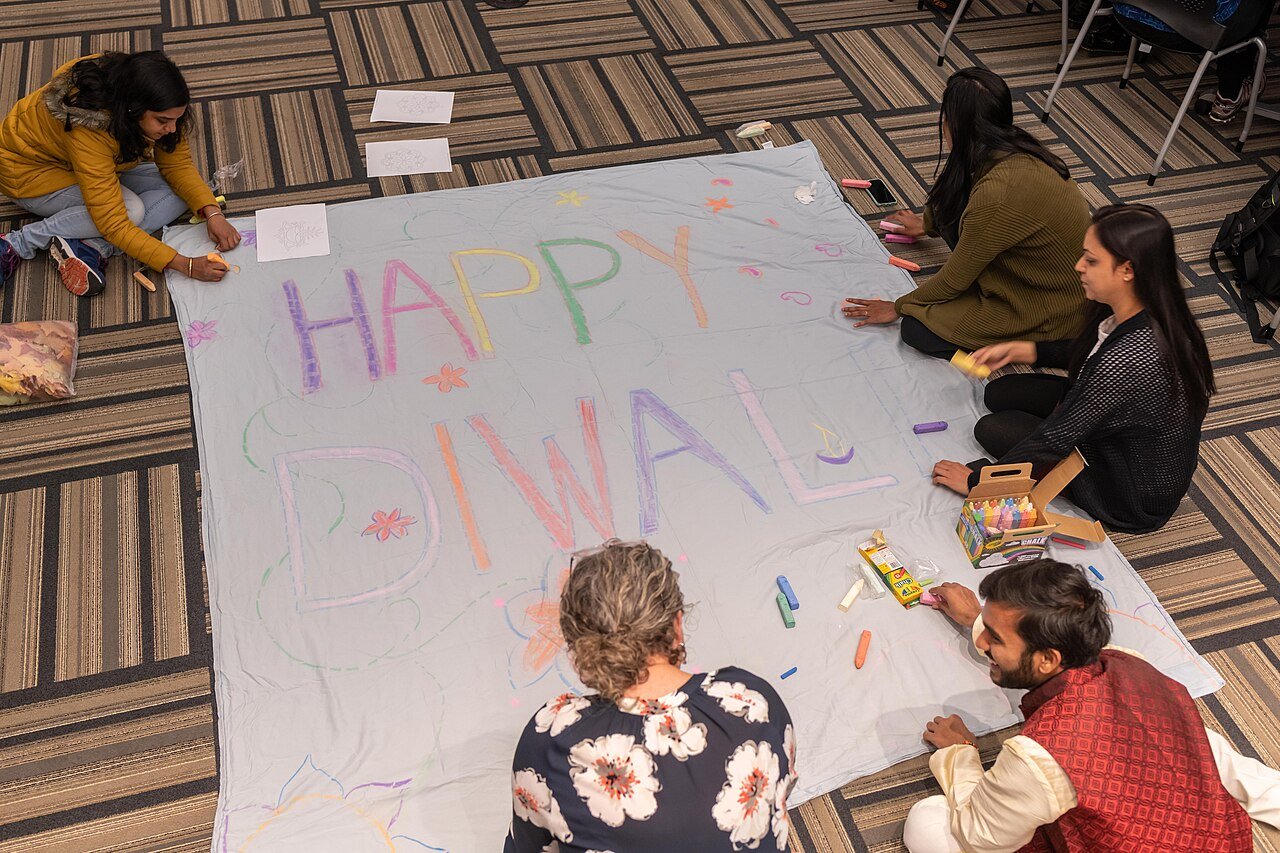
Image: University of Michigan School for Environment and Sustainabi / Wikimedia Commons, CC BY 2.0. Source: Wikimedia Commons.