










By The NRI Editor
It is Saturday morning. You are dragging your 10-year-old out of bed to go to “Bal Vihar,” or Tamil school, or Kathak class. They are whining. You are frustrated. You tell them, “You need to know your roots.”
But deep down, you feel a sinking suspicion: It isn’t working.
To you, “culture” is a deep, emotional anchor. To your child, it is an extra homework assignment on a weekend.
For decades, we have slapped the label “ABCD” (American Born Confused Desi) on our children. We chuckle about it at parties. We worry they are “losing their way.”
I am here to tell you that the “ABCD” label is a lie. Your children are not confused. They are perfectly adapted to their environment. You are the one who is confused.
You are suffering from “Time Capsule Parenting.” You are trying to raise a child for a world that no longer exists (1990s India) in a world you don’t fully understand (2020s America).
Here is why the “Strict Indian Parent” playbook is backfiring, and how to actually build a bridge to your children instead of a wall.
The “Frozen Culture” Syndrome
When an immigrant leaves their home country, their cultural clock stops. If you left India in 2005, your version of “Indian Values” is frozen in 2005. You hold onto rituals, social norms, and expectations with a rigidity that even people in Mumbai or Delhi have long abandoned.
The Reality Check: Modern India is changing fast. But the NRI home often becomes a museum—a static, dusty preservation of “How Things Were.” When you enforce this “Frozen Culture” on your American kids, they don’t see heritage. They see irrelevance. They see a parent clinging to the past because they are afraid of the future. You are raising them to be tourists in their own ancestry—looking at the rituals from the outside, but never feeling at home in them.
The “CEO vs. Shravan Kumar” Paradox
This is the most dangerous psychological knot in the NRI household. We want our children to be “American Success Stories” but “Indian Sons/Daughters.”
- At School/Work: We push them to be leaders. To speak up. To debate. To innovate. To be aggressive like a CEO.
- At Home: We expect them to be “Shravan Kumar” (the mythological archetype of the obedient son). We want them to listen without questioning, respect elders regardless of merit, and follow the script.
You cannot have both. You cannot train a child to be a lion in the world and a sheep in the living room. When you punish a child for arguing back, you are extinguishing the very critical thinking skills that will get them into Harvard. This cognitive dissonance creates resentment. They feel that your love is conditional on them splitting their personality in two.
The Playbook: Raising “Third Culture” Titans
Stop trying to raise “Indian Kids” in America. It is a losing battle. Instead, raise Third Culture Kids (TCKs). These are hybrids who can navigate both worlds with fluency. They are not “confused”; they are “cross-cultural code-switchers.” That is a superpower.
1. The “Why” Before the “What”
The old Indian parenting style was: “Do it because I said so.” The American kid’s brain is wired for: “Why does this matter?”
If you want them to touch an elder’s feet, don’t just command it. Explain the algorithm of the ritual.
- Don’t say: “Touch uncle’s feet, it’s our culture.”
- Do say: “In our culture, we believe wisdom flows from experience. This gesture is a physical way of acknowledging that they have walked a path we haven’t. It’s a humility hack.” Translate the ritual into a value. Kids respect values; they rebel against arbitrary rules.
2. Curate, Don’t Clone
You cannot clone your childhood in the US. Stop trying. Instead of forcing every tradition upon them, curate the high-impact ones. Pick the top 3-4 festivals or traditions that actually bring joy and meaning. Go all out on those. Make them fun, loud, and inclusive. Let the minor stuff go. If Diwali is a stress-fest of cleaning and cooking where mom is screaming, the kid associates “culture” with “stress.” If it’s a party, they associate it with “joy.” Brand your culture better.
3. The “Boardroom” Table
Change the dynamic at the dinner table. Stop lecturing. Start consulting. Treat your teenager like a junior consultant.
- “I’m dealing with this issue at work with a difficult boss. How would you handle it?”
- “What do you think about this news story?” When you respect their intellect, they respect your authority. You transition from being a “Warden” to a “Mentor.” Mentors are sought after; Wardens are avoided.
4. The “Language” Reality
Stop measuring their “Indian-ness” by their fluency in your mother tongue. Language is a tool for connection. If they speak broken Hindi but have a deep, loving connection with their grandparents because they FaceTime them weekly, that is a win. Do not mock their accent. The moment you mock their “American accent” while speaking an Indian language, they will never speak it again. You just killed their confidence to score a cheap joke.
The Bottom Line
Your goal is not to create a replica of yourself. It is to create a human who is comfortable in their own skin.
If they eat pasta with their hands and listen to rap music while doing puja, don’t correct them. That isn’t confusion. That is the beautiful, chaotic, powerful evolution of the diaspora. Celebrate the hybrid.
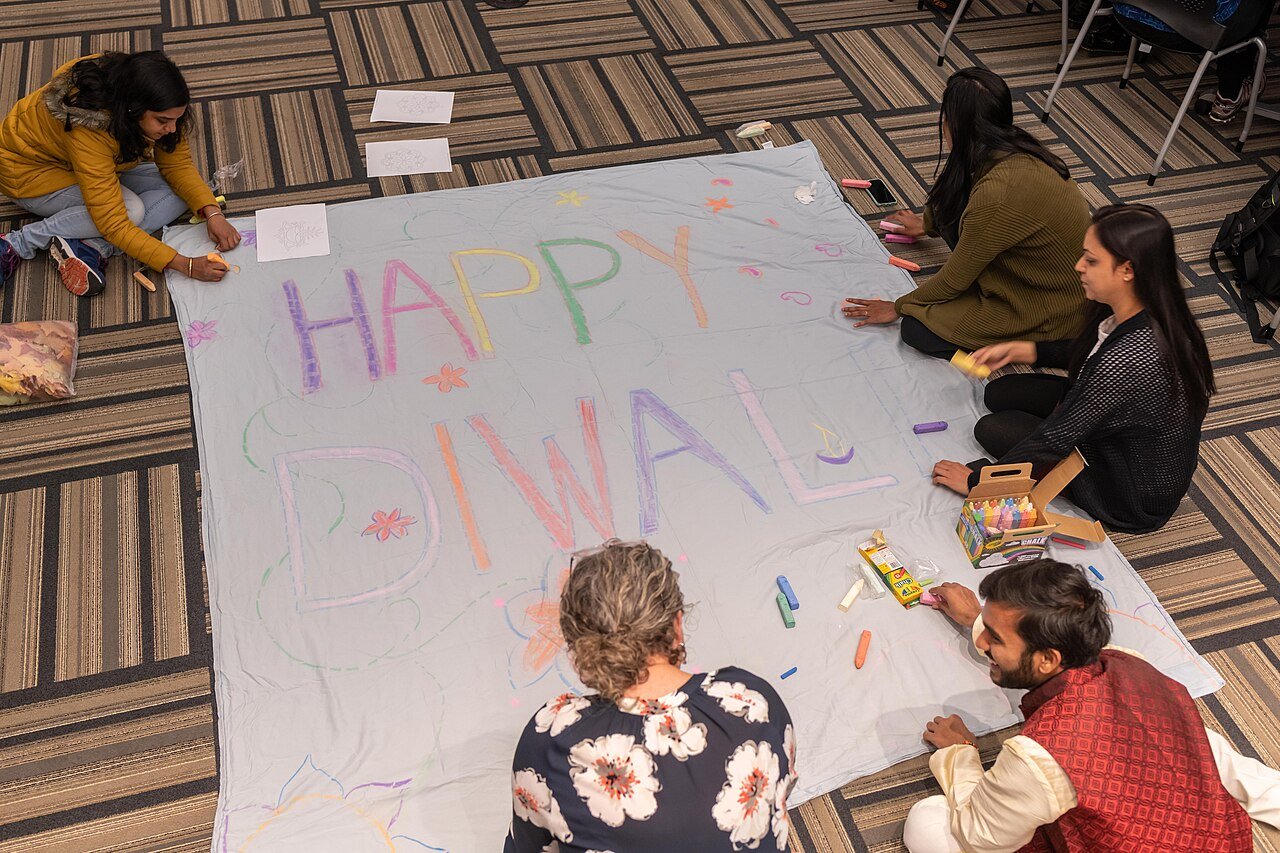
Image: Sree1959 / Wikimedia Commons, CC BY-SA 4.0. Source: Wikimedia Commons.