










By the time you land at JFK, Heathrow, or Changi, you have already done the hard part. Or so you think.
You navigated the standardized tests, the visa interviews, and the heartbreaking airport goodbyes. You land a job that pays in a hard currency—dollars, pounds, euros—and the conversion rate makes you feel instantly wealthy. But two years later, you check your net worth, and it is confusingly stagnant. You are earning six figures, yet the savings account is barely moving.
Charlie Munger famously said, “The first $100k is a bitch.” He meant that the sheer gravity of getting zero to substantial savings requires massive effort because you have no compound interest helping you yet.
But for the NRI, Munger’s rule is doubly brutal.
We face a specific set of psychological headwinds that native-born citizens do not. We battle an internal currency converter, a scarcity mindset inherited from our parents, and the invisible tax of setting up a life from scratch. If you feel like you are running on a golden treadmill, you are not crazy. You are just stuck in the immigrant accumulation trap.
Here is the diagnosis and the exit strategy.
The Mental Forex Trap
The single biggest obstacle to the first $100k is not the cost of living; it is the mental math you do in the grocery aisle.
I call this The Rupee Anchor. When you first arrive, you convert everything to Indian Rupees. You hesitate to buy the $6 coffee because “that is 500 rupees, a full meal in Bangalore.” This looks like prudence, but it is actually a distraction.
You scrimp on small comforts that boost productivity, but then you bleed money on big ticket structural errors because you don’t understand the local system. You buy a car with a terrible interest rate because you didn’t understand credit scores. You rent an apartment that is “cheap” but requires a 90 minute commute, destroying your ability to upskill.
The Fix: You must declare a “Base Currency” for your life. If you earn in Dollars, you spend in Dollars. Stop converting. The moment you stop benchmarking against prices back home, you stop making emotional spending decisions and start making rational value decisions.
The “Visa Anxiety” Liquidity Drag
Most NRIs I speak to have a dangerous amount of cash sitting in a checking account earning 0.01% interest.
Why? Because of the Visa Sword of Damocles. Deep down, there is a fear: What if I lose my job? What if I have to leave in 30 days? I need liquidity.
This fear keeps your money on the sidelines. While your American colleague is dumping money into a 401(k) or the S&P 500, you are hoarding cash “just in case.” This safety net is expensive. Inflation eats that cash alive. You are paying a premium for a sense of safety that is mathematically false.
The Protocol: Sprinting to $100k
Getting to that first $100k requires a wartime mentality. It is not about saving $50 on groceries; it is about structural leverage. Here is the playbook to clear the hurdle.
1. The “Beast Mode” Year. You cannot drift to your first $100k. You have to sprint. Commit to one year of aggressive limitation. This does not mean being miserable; it means keeping your fixed costs (rent, car, insurance) drastically lower than your peers. Live with roommates for one year longer than you want to. Drive the used Honda Civic while your friends lease the Tesla. The goal is to widen the gap between income and expense to 40% for just 12 months.
2. Automate the “First Hour.” The first hour of your labor every day belongs to you, not your landlord or the IRS. Set up an auto-transfer that moves money out of your checking account the morning your paycheck hits. If you see the money, you will find a reason to spend it or “save it for later.” If it vanishes into an investment account automatically, you learn to live on what remains.
3. Ignore the Remittance Guilt. This is controversial, but necessary. In your early years, pause the remittances unless it is a medical emergency. Indian families often expect the “foreign earner” to start contributing immediately. But sending $500 a month home before you have your own oxygen mask on is financial suicide. Explain to your family that you are building a foundation that will allow you to help them more significantly in five years. Build your fortress first.
The Tipping Point
Here is why this matters.
Once you hit $100k, the math changes. A 10% market return on $100k is $10,000. That is a decent chunk of a salary. Your money starts working as a second employee. The psychological relief is immense. You stop worrying about the car breaking down. You stop stressing about the H1B renewal costs.
The first $100k buys you something more valuable than a luxury car or a house in India.
It buys you the freedom to say “No.” It buys you the mental bandwidth to think about your career strategically rather than desperately.
Stop looking at the conversion rate. Look at the compounding rate. The first $100k is a slog, but everything after that is just gravity working in your favor.
This article is general information, not financial advice. Market returns are not guaranteed, and your situation may differ.
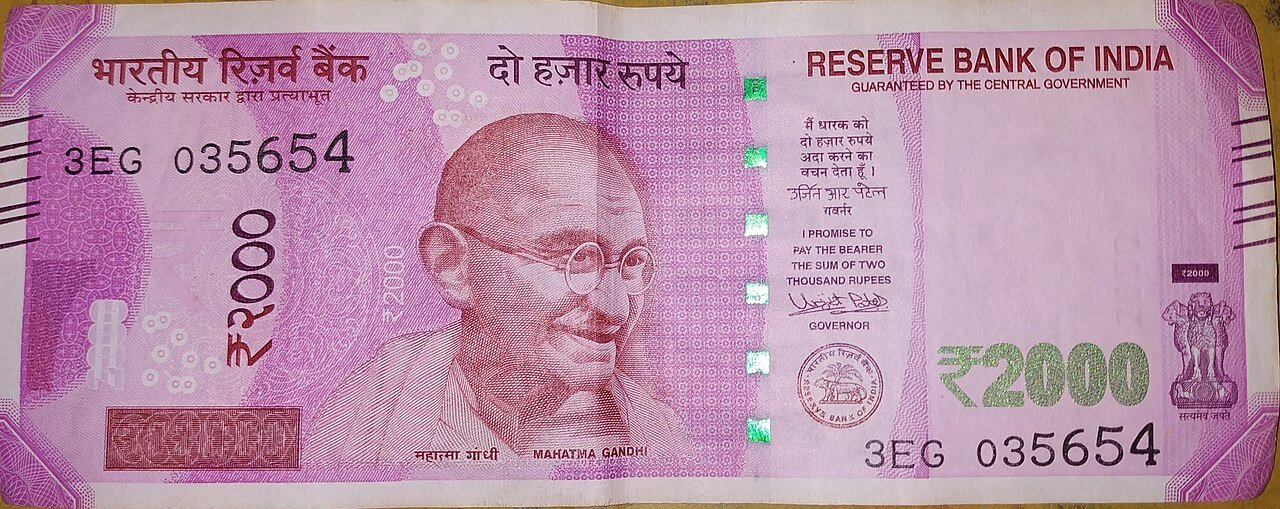
Image: Hamster28 / Wikimedia Commons, Public domain. Source: Wikimedia Commons.