










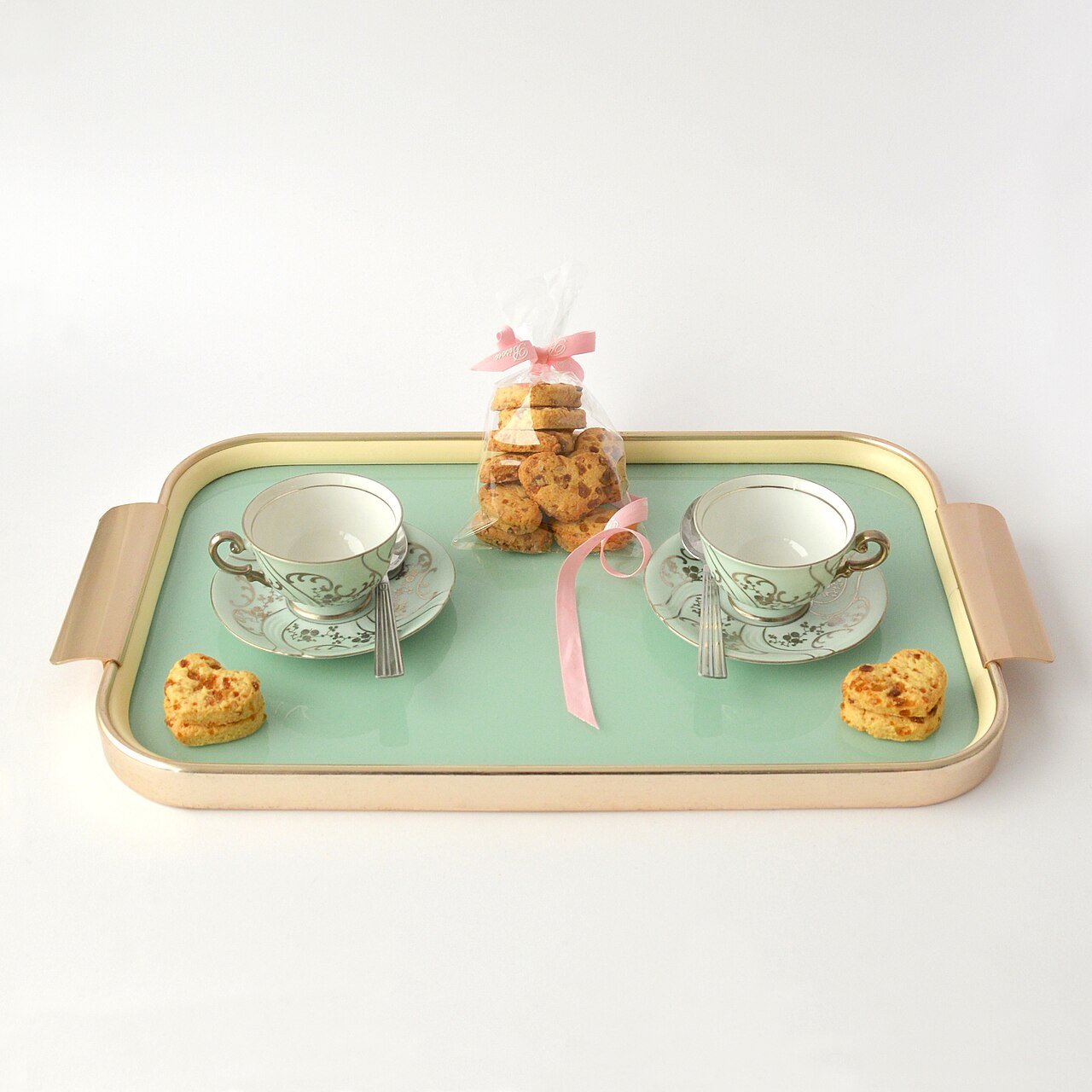
There is a specific kind of melancholy that hits you in the cookie aisle of a Whole Foods in San Francisco or a Waitrose in London. You stand there, staring at a package of “Artisanal Scottish Shortbread” that costs six dollars. It promises buttery goodness. It promises heritage. It promises to pair perfectly with your Earl Grey.
So you buy it. You go home. You brew a cup of tea that is slightly too milky because you are trying to replicate the color of home. You dip the expensive shortbread. And then, tragedy strikes. The biscuit crumbles instantly, dissolving into a buttery sludge at the bottom of your mug.
This is the Biscuit Betrayal.
For the global Indian, the migration journey is often measured in these small, culinary disappointments. We spend years trying to convince ourselves that McVitie’s Digestives are a sophisticated upgrade, or that a Water Cracker has flavor. We lie to ourselves. We try to gentrify our palate. But the truth is stark and scientifically provable: Western biscuits are baked for coffee or polite nibbling. They are not engineered for the violent, high thermal combat of a Desi Chai Dip.
Here is the wake up call. You do not need better flour. You do not need organic butter. You need to understand why the yellow packet with the creepy baby photo is the only thing that survives the cross border transition.
The Physics of Structural Integrity
Let us stop pretending this is about “taste” in the Michelin sense. If we are judging purely on culinary finesse, a Shortbread beats a Parle-G. But we are not judging flavor profiles. We are judging mechanics.
The fundamental flaw of Western biscuits is their texture. Shortbread relies on high fat content. Butter melts. When you introduce a butter heavy biscuit to hot tea (90°C), the structural bonds liquefy immediately. It is suicide. Digestives rely on coarse wheat. They are too thick. They act like sponges, absorbing liquid so rapidly that they become heavy and detach from your grip before the journey to your mouth is complete. Crackers are dry and savory. Dipping a cracker in chai is a crime that should revoke your OCI card.
The G Factor Resilience Parle-G is different. It is built on a conceptual framework I call Optimal Moisture Resistance. It is designed to withstand the heat of the tea just long enough to soften, but retains enough rigidity to hold its shape for that critical two second transit window. It is a suspension bridge made of glucose and flour. It bends. It does not break.
The Glucose Trap
Western palates are obsessed with nuance. They want hints of vanilla, touches of sea salt, whispers of oat.
The immigrant palate, however, craves the Glucose Hit. Parle-G does not taste like vanilla or butter. It tastes like “Glucose.” It is a specific, aggressive sweetness that cuts through the tannins of strong, boiled tea. Western biscuits are too polite. They get lost in the ginger and cardamom. Parle-G fights back.
When you are sitting in a cold apartment in Chicago, watching snow pile up, you do not want a polite biscuit. You want a sugar rush that reminds you of coming home from school at 4 PM. You want the taste of survival.
The Economic Psychology of the Yellow Packet
There is an economic violence in buying Western cookies. Spending $7 on a box of biscuits feels like a tax on your identity. It reminds you that you are living in a currency that demands a premium for basic comfort.
Parle-G ignores inflation. It ignores gentrification. It is the economic anchor of the Indian subconscious. The packet looked the same in 1995. It looks the same now. In a life defined by visa uncertainty, rental fluctuations, and layoff anxieties, the static nature of that yellow packet is a psychological balm. It tells you that some things remain cheap, accessible, and yours.
The Playbook: Reclaiming Your Pantry
We need to stop apologizing for our preferences. We need to stop serving our parents dry crackers when they visit, hoping they will appreciate the “quality.” They won’t. They will just wonder why you have forgotten how to host.
Here is the tactical guide to fixing your pantry.
The 80/20 Stocking Rule Your pantry should be 80% Desi engineered biscuits and 20% Western “guest” biscuits. Keep the Oreos and Digestives for your non Indian colleagues. They appreciate the dryness. Keep the Parle-G, Good Day (Cashew only, Pistachio is a lie), and Bourbons for the inner circle.
The Dip Test Before you commit to a new biscuit brand, perform the Dip Test. Brew tea to boiling. Dunk for exactly three seconds. Lift. If it breaks, it is trash. If it holds, it stays. Parle-G allows for a dip variance of 2 to 4 seconds. A Digestive has a variance of 0.5 seconds. Do not play games with low margin errors.
The Storage Protocol Western biscuits go stale. Parle-G gets soft. There is a difference. A soft Parle-G is still edible; it just becomes a different genre of food. A stale cracker is a punishment. Invest in air tight steel dabbas. Not Tupperware. Steel. The psychological effect of opening a steel tin to find a stack of glucose biscuits is 50% of the dopamine hit.
The Final Verdict
You can upgrade your car. You can upgrade your house. You can even upgrade your accent. But you cannot upgrade your comfort food. The biscuit is not just a snack. It is a tether.
Stop trying to love the Shortbread. It does not love you back. It will fall apart on you when things get hot. The Parle-G will hang on. And right now, hanging on is exactly what we need to do.