









By The Chaiscoop Desk. Based on published reporting; we did not independently check local market data. Updated October 12, 2026.
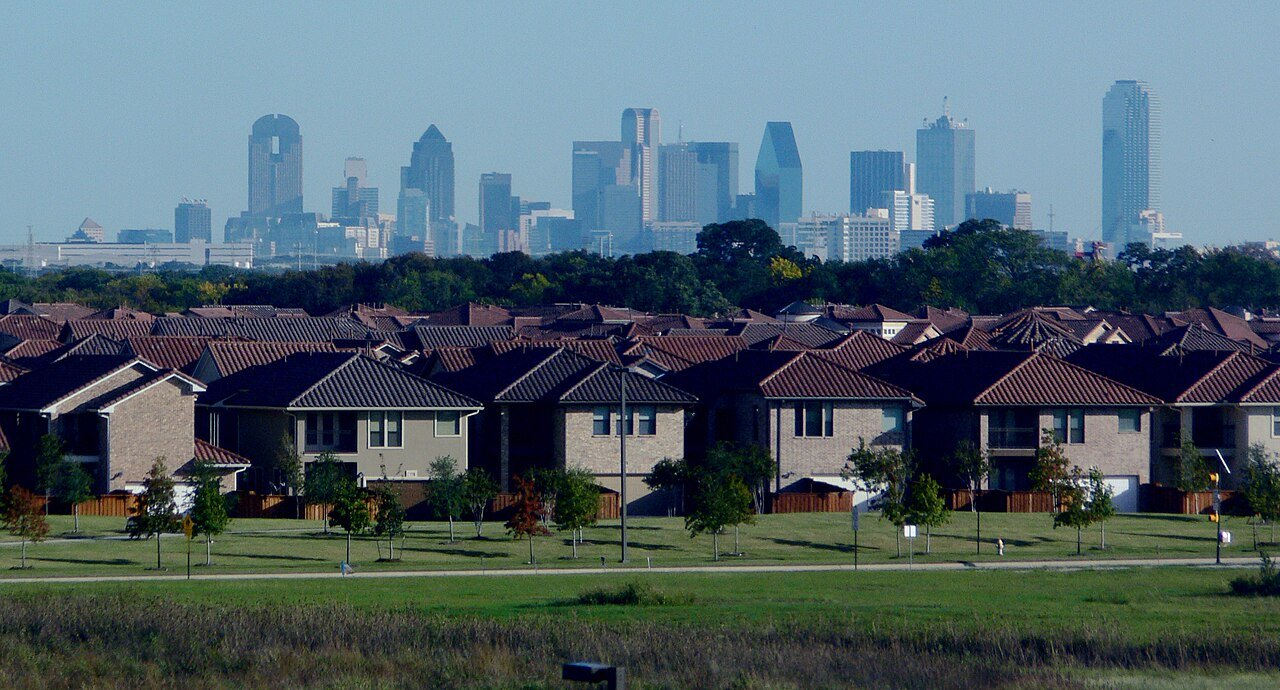
North Texas suburbs that grew quickly on the arrival of Indian professionals are showing signs of strain. Reporting from earlier this year, based on a Bloomberg analysis and summarized by India Weekly in June 2026, documents falling prices in Collin County and builders and agents describing fewer South Asian buyers. What it does not show is how many H-1B families have actually left for India.
What the data shows
- Prices. Redfin data cited in the report show home prices in Collin County suburbs north of Dallas fell almost 9% in February 2026 from a year earlier, against about 4% for the wider Dallas-Fort Worth metro.
- The H-1B footprint. The report says the region saw about 32,000 new H-1B approvals in the four years ended September 30, 2024, more than Silicon Valley, Seattle, San Francisco or Washington, DC, and second only to the New York City metro.
- Growth. Census data cited in the report show Celina’s population more than tripled in five years, and that Collin County had the largest percentage increase in Indian residents among large U.S. counties. CBRE says Dallas-Fort Worth has drawn more corporate headquarters relocations than any other U.S. region since 2018.
What builders and agents say
These are individual accounts, not market-wide measures. Builder Zach Schneider of Tradition Homes said South Asian buyers once made up about 70% of his company’s sales and now account for less than 30%. Agent Neeraj Gupta said some clients are selling at a loss and others are struggling with mortgage payments. The report describes a Celina buyer who paid $895,000 in 2023 and has cut the asking price to $873,000, and a Frisco client with two homes over $1 million who is considering leaving the U.S.
The policy backdrop
The report says the administration has tightened H-1B rules through new fees and higher salary thresholds, that Texas Governor Greg Abbott ordered state agencies and public universities to freeze new H-1B petitions, and that Attorney General Ken Paxton expanded investigations into suspected visa fraud or abuse. An immigration lawyer quoted in the report notes that people who lose an H-1B job generally have 60 days to find a new sponsor or change status.
What the reporting does not show
- How many Indian-born buyers or H-1B families have left the market or the country.
- How much of the price decline comes from H-1B pressure versus other factors such as mortgage rates and new-home supply. The Redfin figures show a decline but do not isolate a cause.
- Sales volume, inventory or mortgage delinquency data for the H-1B segment specifically.
So the claim that H-1B workers are moving back to India and pulling down suburban prices is plausible and supported by anecdotes, but it is not yet shown as a measured, market-wide driver.
What is new
On October 8, the administration suspended eight companies from the PERM green card program, including Infosys, Tata Consultancy Services, Cognizant, Wipro and HCL Technologies, large employers of Indian professionals. It is too early to say whether that action will affect local housing; we found no data on it yet. The figures above also predate it. For current numbers, check Redfin and local MLS data directly.
If you are affected
This is general information, not financial or legal advice. Homeowners facing a job loss or visa deadline should talk to their lender early, before missing a payment, and get an agent’s view of recent comparable sales. An immigration attorney can explain your options within the 60-day window.
Sources
- India Weekly: H-1B visa uncertainty and the Texas housing market (summarizing a Bloomberg report)
- Bloomberg: Dallas Housing Market Cools as H-1B Visa Indian Buyers Vanish (original report; we could not open it directly)
- TIME: U.S. Expands Crackdown on Green Cards, Student Exchange Visas
Image: Photo: Andreas Praefcke / Wikimedia Commons, CC BY 3.0. Source: Wikimedia Commons.